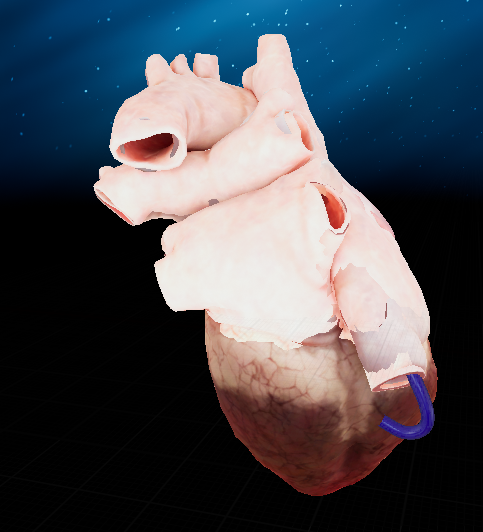
Heart Tool Trainer
Unreal Engine Developer
Developed an immersive VR surgical training application that teaches surgeons how to safely perform a heart valve procedure using a specialized medical device.
Technologies
Unreal Engine • Blueprint • VR • Animation • Interaction Systems • UI
The Heart Tool Trainer is a VR training application designed to teach surgeons how to safely perform a specialized heart valve procedure using a balloon catheter device. The experience guides users through each stage of the operation using interactive tutorials, procedural guidance, and realistic tool interactions.
Challenge
I joined the project after development was already well underway and significantly over budget. Midway through production, both the lead engineer and lead artist departed, leaving me responsible for maintaining development momentum, onboarding replacement team members, improving communication with the client, and helping deliver the project successfully.
My Contributions
Developed interactive VR surgical training systems within Unreal Engine.
Implemented chapter navigation and procedural progress tracking.
Built contextual UI and tutorial systems to guide surgeons through each stage of the procedure.
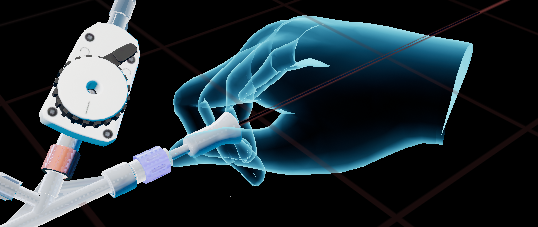
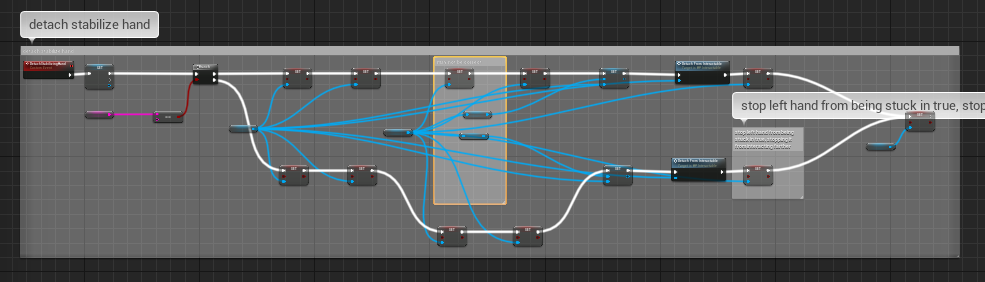
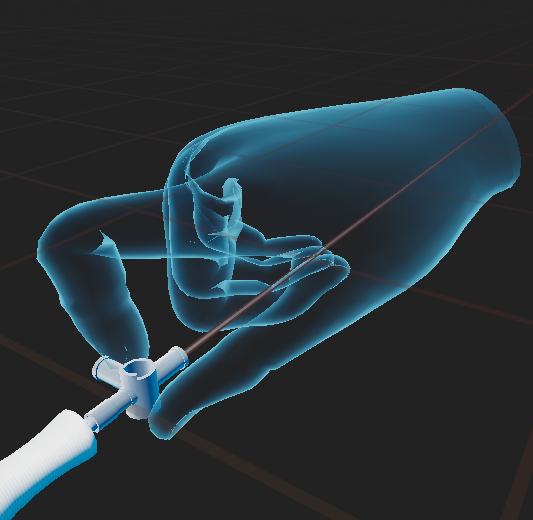
Developed VR hand attachment and detachment systems supporting multiple interaction points and animations.
Created a flexible interaction system supporting both Alembic and FBX animation workflows after pipeline changes.
Diagnosed and resolved production issues throughout development.
Collaborated directly with medical professionals to refine interactions and improve training accuracy.
Maintained and extended an existing Unreal Engine codebase while helping stabilize an over-budget project.
Engineering Challenges
Taking ownership of an active production project required rapidly understanding an unfamiliar codebase while continuing feature development under tight deadlines. I also adapted interaction systems to support both Alembic and FBX animation workflows after pipeline changes, allowing production to continue without rewriting existing gameplay systems.
Core Systems
Procedure Navigation
Developed a chapter navigation system that allows users to jump between surgical stages while tracking completed procedural steps. This allowed instructors to quickly demonstrate individual portions of the procedure without restarting the entire simulation.
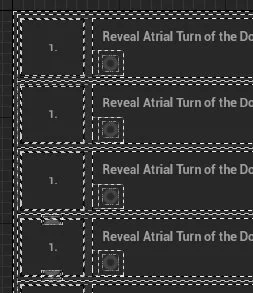

Interactive Tutorial System
Built contextual tutorial guidance that highlighted the next required interaction, reducing confusion and improving training effectiveness. Dynamic visual guidance reduced user confusion and improved training efficiency for first-time users.
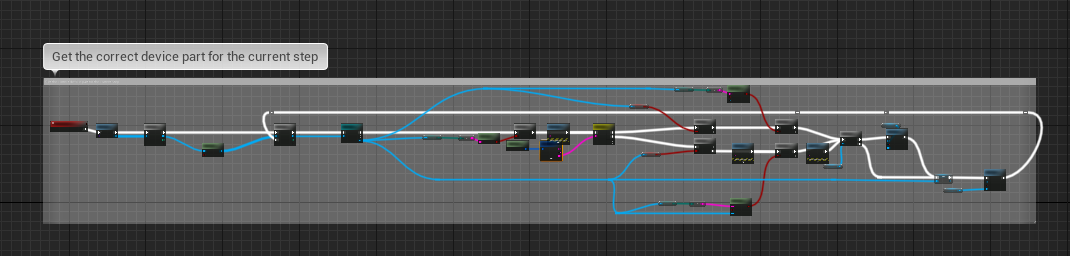
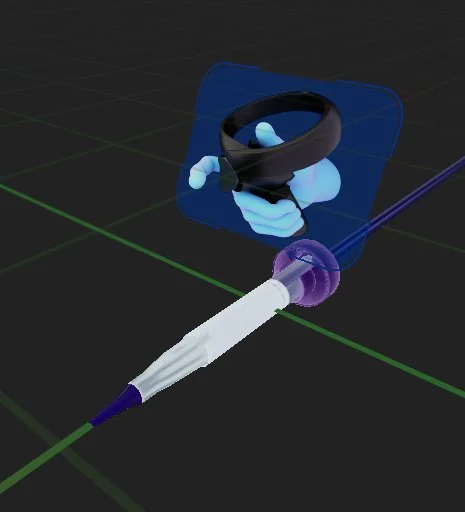
VR Hand Interaction
Implemented attachment and detachment systems allowing virtual hands to grip surgical instruments at multiple interaction points while triggering context-sensitive animations. The system supported multiple interaction points and animation states, allowing realistic manipulation of surgical instruments throughout the procedure.
Results
• Successfully delivered the VR training application despite significant staffing changes during production.
• Helped stabilize an over-budget project through continued feature development and technical support.
• Improved collaboration between developers and medical professionals through more effective communication.
• Adapted core interaction systems to accommodate major animation pipeline changes without delaying delivery.